Production Spring 2026



Swipe For More >
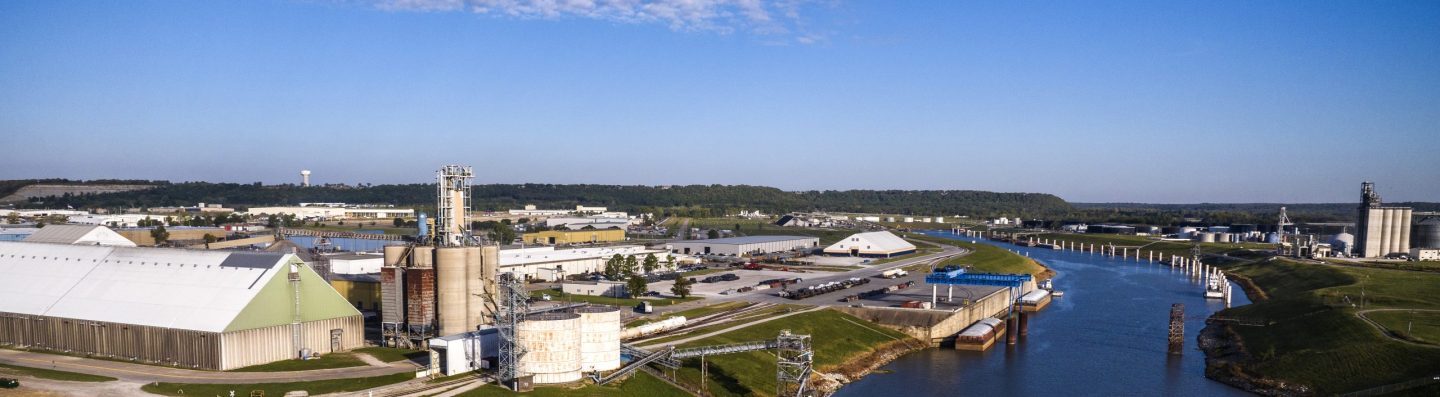
Out across the countryside, farmers know a simple truth: growing the crop is only half the job. Getting it to market at the right time and at the right price is what really determines whether a season pencils out.
For years, producers across Oklahoma and the surrounding states have faced a familiar challenge. Grain grown in the heartland often travels a long road before it ever reaches an overseas buyer. Trucks haul it hundreds of miles to coastal ports, adding cost, time, and wear along the way. In a world where global markets move fast and margins are tight, those extra miles can make the difference between profit and loss.
“As farmers, we’ve always known that how we move grain matters just as much as how we grow it,” said Zack Rendel, a northeast Oklahoma sorghum producer. “Every extra mile and every extra hand it passes through chips away at the value.”
Now, a new project underway at the Tulsa Port of Catoosa aims to change that equation.
Construction began in October 2025 on a new rail unit train terminal designed to move agricultural commodities more efficiently from farms in the region to buyers across the globe, especially in fast-growing Asia-Pacific markets. When the project is completed, it will open the door to a new kind of shipping opportunity for farmers and agribusinesses across the central United States.
And for many producers, it could mean a shorter, more favorable path from fields to the global market.
Projects like this do not appear overnight. They usually start the same way most good farm ideas do, with conversation among farmers, shippers, and industry partners.
For years, agricultural leaders and logistics providers across the region have been asking a simple question: how can we move grain more efficiently and stay competitive in global markets?
The challenge is that much of the Midwest and Southern Plains sit far from coastal export terminals. Producers often have to truck grain long distances before it ever touches a rail line or ocean vessel, adding cost at every step.
Out of those conversations came the idea of building a new rail terminal closer to the farms themselves, one that could connect truck, rail, and barge transportation in a single location. That location turned out to be the Tulsa Port of Catoosa.
For decades, the port has served as Oklahoma’s gateway to the inland waterway system. Now, the new rail terminal will build on that legacy and expand what is possible.
The new facility will operate as an intermodal agricultural matchback terminal. Instead of long-haul trucking grain to distant export terminals, producers will be able to deliver product to the Port of Catoosa, where it can be loaded into containers, moved by rail to the West Coast, and shipped overseas.
The concept is simple. Fewer touches and more efficiency.
“Instead of making multiple stops, a farmer can deliver grain, have it containerized, and then turn around and haul fertilizer back to the farm,” said Zach Simon, director of ingredient utilization and pet food for the United Sorghum Checkoff Program. “That kind of backhaul makes a real difference in time and cost.”
The terminal is designed to handle a wide range of products, from traditional grains and distillers dried grains (DDGs) to identity-preserved crops and specialty ingredients. That flexibility opens the door for more targeted marketing opportunities.
“Identity preservation is possible with containerized grain,” Simon added. “If an end user wants a specific hybrid, grade, or color, producers now have the ability to deliver exactly that.”
By creating a hub for these products, the project strengthens the transportation network connecting Oklahoma, Kansas, Nebraska, Missouri, and surrounding states.
For farmers, that means more shipping options and more competition in the transportation market, which often leads to better freight rates.
One of the biggest advantages of improved transportation is the influence it gives producers in the marketplace.
When farmers have only one practical shipping option, they often have little room to negotiate. When multiple transportation routes are available, the balance begins to shift.
“That kind of connectivity creates optionality,” said Rendel. “Optionality creates competition. When more buyers can access your crop, the entire system has to sharpen its pencil.”
This new facility is designed to expand those options, connecting truck, rail, and global shipping channels while extending the Port of Catoosa’s reach deeper into surrounding states.
For producers, that means more pathways for moving grain, whether to a domestic processor or an overseas customer.
In agriculture, flexibility is power.
“When you can reach more buyers and move grain more efficiently, you are no longer just taking the price you are given,” said Rendel. “You are part of setting it.”
Transportation costs can quietly eat away at a farm’s bottom line. Diesel fuel, driver time, equipment maintenance, and long-distance hauling all add up quickly.
That is why every aspect of the new terminal has been designed with efficiency at its core.
The facility will serve as a centralized location where commodities can move between trucks and multiple rail systems, improving flow across the network. Its location, at the crossroads of rail lines, highways, and the McClellan-Kerr Arkansas River Navigation System, offers flexibility in how grain is shipped.
There is also a practical benefit farmers will appreciate: the ability to backhaul inputs.
“The same system that moves grain out can bring fertilizer and other inputs back in,” said Rendel. “That keeps trucks from running empty and helps lower costs on the input side of the equation.”
The world’s appetite for grain continues to grow, especially across Asia-Pacific nations, where rising populations and expanding livestock industries are increasing demand.
Producers across the central United States are well positioned to help meet that demand, but reaching those customers requires a transportation system that can compete globally.
With improved access through Tulsa Ports, farmers can more closely align production with market demand.
“Global buyers are looking for specific traits and consistent quality,” said Rendel. “With better access to export channels, we can grow with purpose instead of guessing what the market might want.”
Big infrastructure projects take years of planning, partnership, and persistence. In many ways, that spirit mirrors the mindset of farmers themselves.
Agriculture has always been about adapting, innovating, and finding better ways forward. The new rail terminal at Tulsa Ports reflects that same determination.
It is a project built by people who believe the heartland deserves stronger connections to global markets and that farmers should have the tools they need to compete.
For Rendel, the impact is already clear.
“From my perspective, this is not just about moving grain,” he said. “It is about transforming how we operate as farmers, connecting directly to global demand while improving the economics on both sides of the balance sheet.”
When operational, the terminal will not just be another transportation facility. It will be a new gateway for agriculture across the region.
And for farmers looking toward markets across the Pacific, that gateway could make all the difference.